Technologies


R&D and co-design
R&D and co-design
The presence in different markets allows Mevis to face new challenges every day. The broadening of skills and experience is a necessary condition for full customer satisfaction. A large international team of Project Managers and Manufacturing Engineers supporting customers from the offer stage, with solutions that guarantee feasibility and best costs. Close collaboration with tooling, machine and automation designers allows the development of a new part to be approached with a systemic vision.
Continuous collaboration with local universities guarantees constant updating and the possibility of attracting new talent.
Over the years, Mevis has become a true designer partner working with the engineers of the technical offices of large multinationals. The development activity also includes a prototyping department that supports the design of new products and/or processes.

Tooling and automation
Tooling and automation
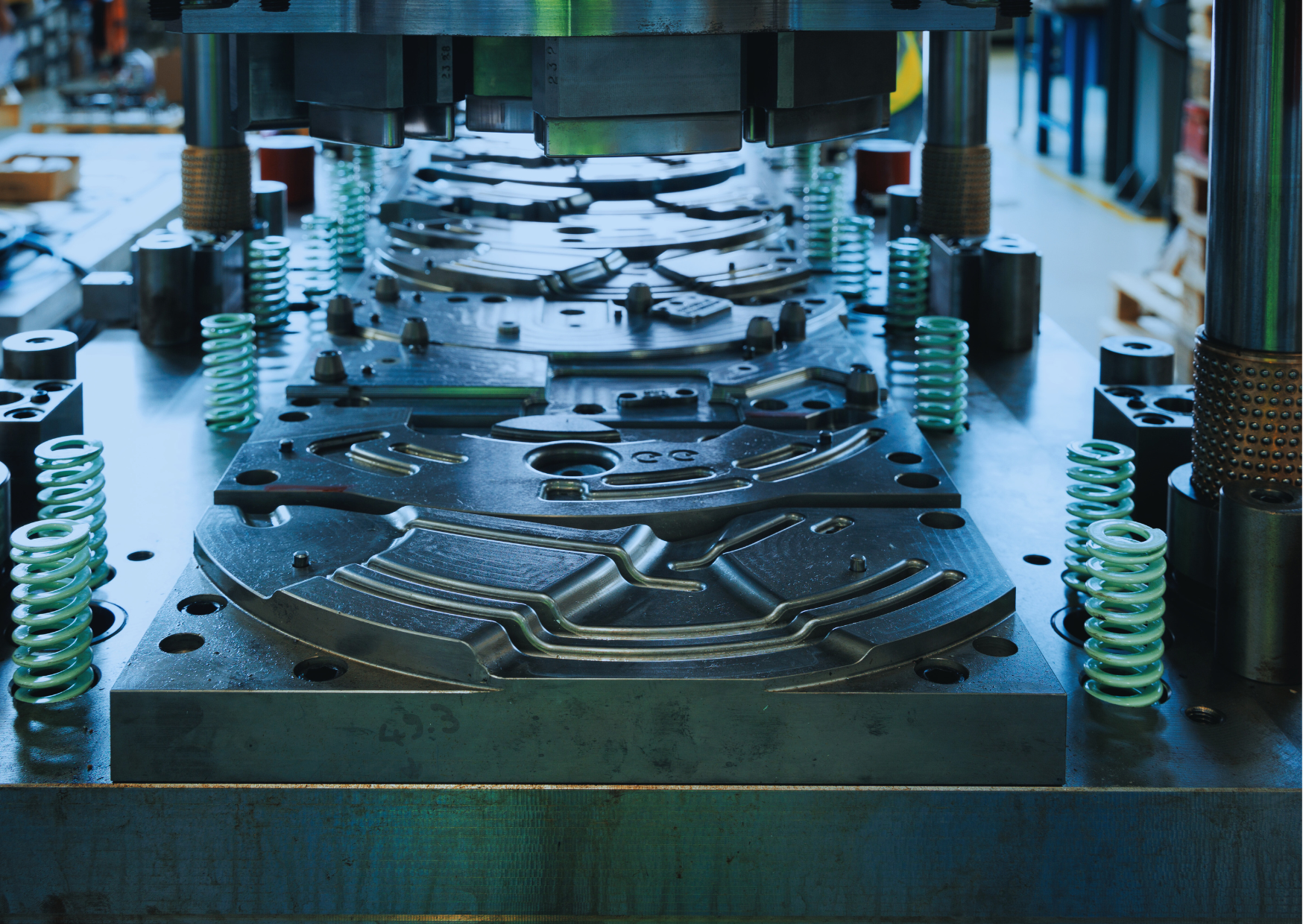
The stability of a production process depends on the quality of the production system and its equipment. This is precisely what drove Mevis to create a structure of over 150 resources to design and build equipment, gauges, production systems and automation. Thanks to this, Mevis has become one of the largest toolmakers in Italy. These projects take shape thanks to decades of experience, continuous comparison with the best manufacturers and a targeted presence at industry trade shows.
Recent acquisitions have further consolidated the skills of the team, leading to the creation of Mevis Tech, a treasure chest of knowledge in the development of production systems and automation. Automation that is not just limited to forming processes but increasingly involves the management of the material flow, with automatic handling and the introduction of AGV systems.


Laboratory
Laboratory
The support of a laboratory is essential in the development of new products and processes. The focus on laboratory facilities has been as important as the focus on process technology.
Mevis' first research laboratory dates back to 1995 and was already listed in the Research Laboratories Register of the Ministry of Education, University and Research in 2002. Since then, laboratories have been developed at all production sites thus ensuring testing, metrology management and other research activities.
The testing activities address all the aspects of the product, from development to the creation of the prototype, from raw material analysis to support for the fine-tuning of production processes, from production control to final testing.

Mechanical cutting/bending
Mechanical cutting/bending
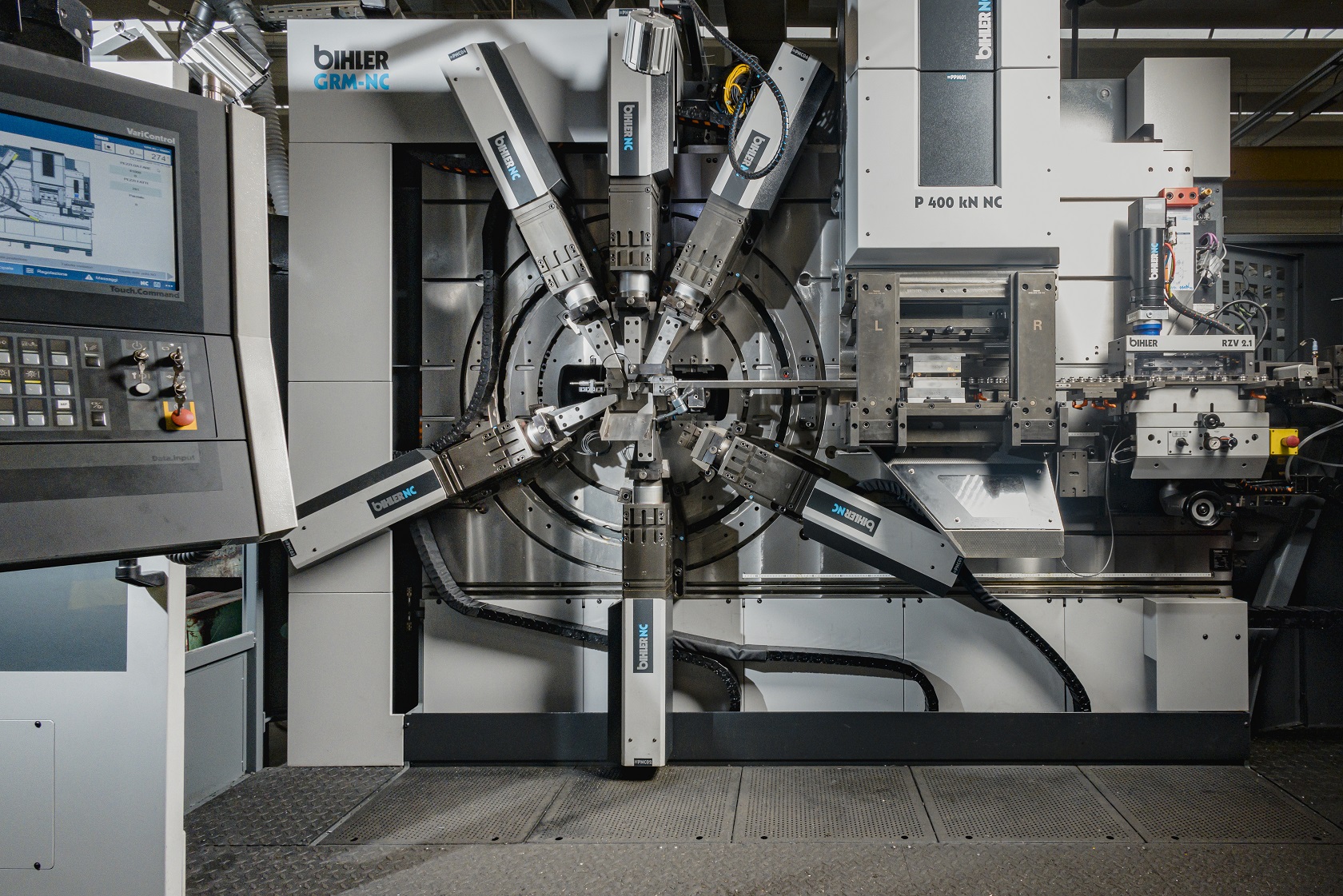
Over the years, small metal components have undergone geometric changes, in search for more cost-effective solutions. Hence the evolution of the presses into combined machining centres that allowed the simultaneous cutting, bending and assembly of the components. A hybrid concept between pure mechanical cutting and "multi-slide" bending.
Bihler is the machine manufacturer that better demonstrates this technological development, and it is Bihler that since the 1980s Mevis has chosen as partner for the development of high precision and performance cutting, forming, threading, and welding cells with 100% control.

Presses
Presses
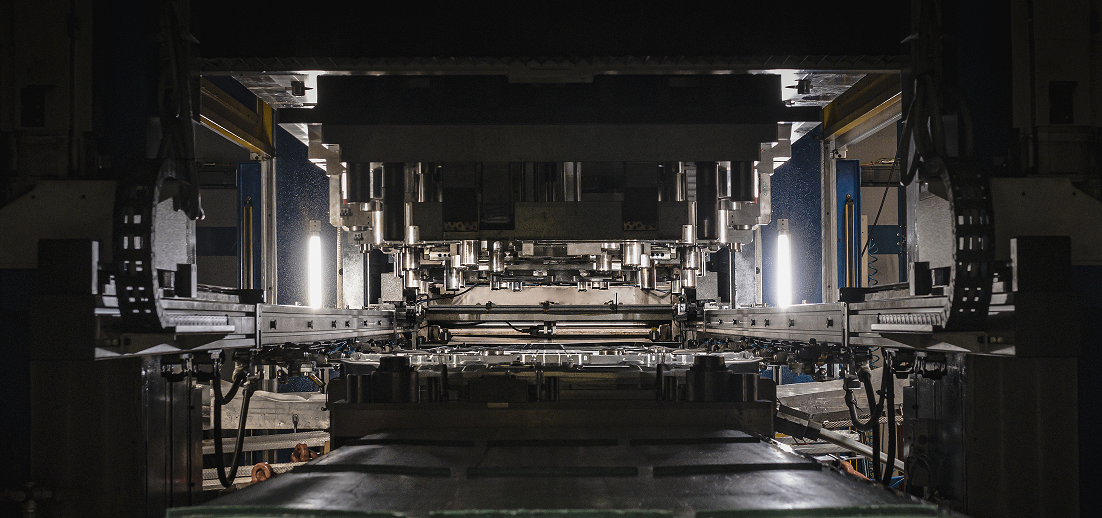
This is by far the technology that better represents today the capabilities and skills of Mevis. Mevis uses latest generation mechanical, hydraulic and servo presses ranging from 15 to 2.000 ton. The stamping machine pool includes fast presses capable of delivering the best performance levels.
Mevis offers progressive and transfer stamping, with clinching and welding systems integrated in the presses themselves. Advanced multi-axis and multi-material feeding systems as well as three-dimensional transfer systems guarantee solutions that extend the technological offer. The offer is then enriched by the production of deep-drawing parts of high complexity and aesthetic characteristics.


Laser cutting and punching
Laser cutting and punching
Mevis integrates 2D and 3D laser cutting technologies to ensure high precision, production flexibility and consistent quality in the manufacturing of metal components. The available systems allow us to meet a wide range of design requirements. These solutions are complemented by combined machines that perform laser cutting and punching operations simultaneously, optimizing time, processes and results. The versatility of the technologies employed enables us to manage an extremely broad range of geometries and designs, supporting the development of complex products for the main industrial and metal fabrication sectors.

Welding and assembly
Welding and assembly
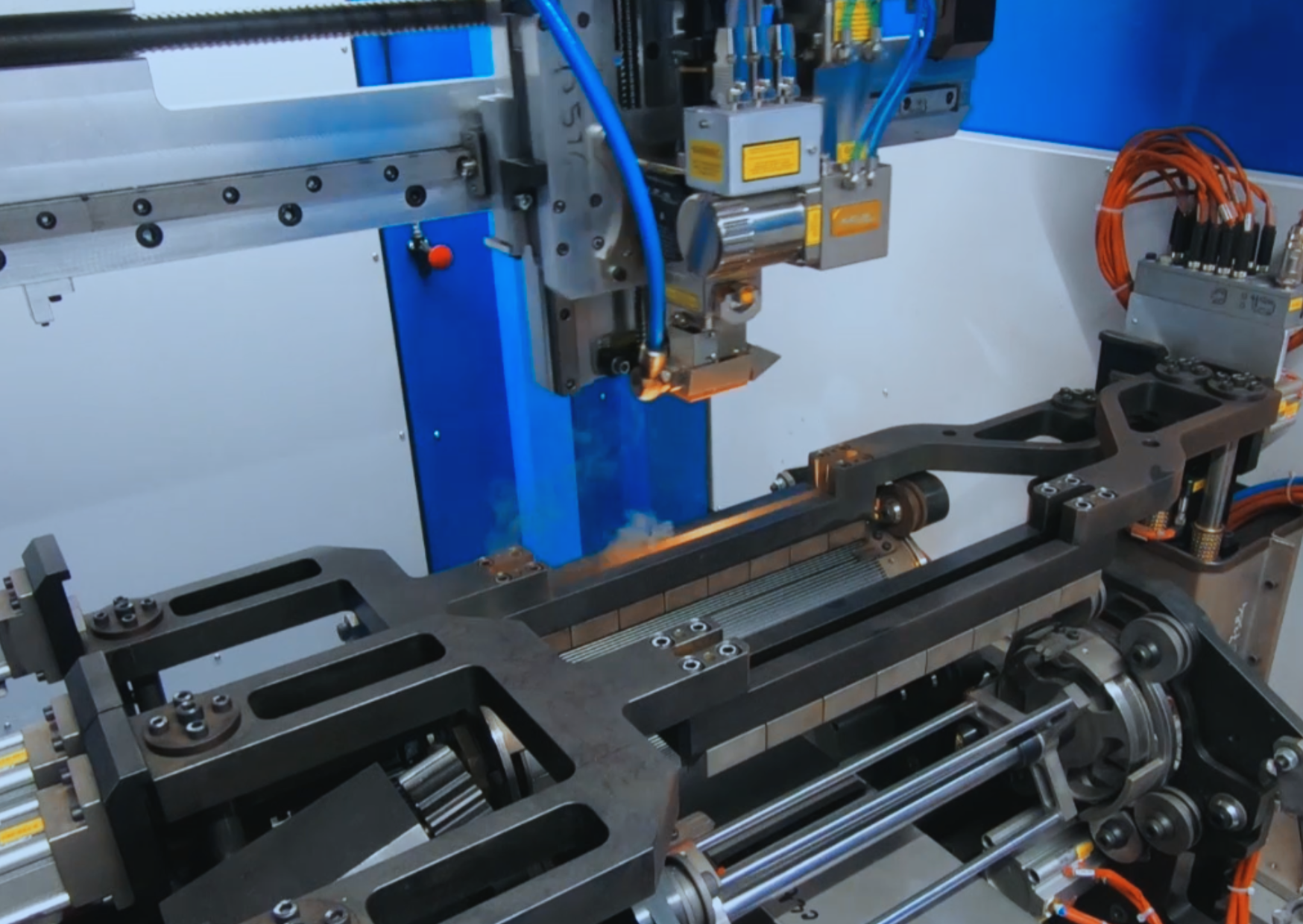
From the production of the individual components to their assembly, the step was quick. Right from the start, requests came from the market to assemble components: clinching, riveting (e.g. tox), or simple assembly tasks. Also natural was the evolution towards welding systems, from resistance welding, through MIG\MAG wire welding, TIG, induction and ultrasonic welding to laser welding, now a widely used technology.
The welding process is defined as critical in terms of its functionality and complexity, but this does not mean that Mevis has shied away from the technological challenge, even when it required specific safety precautions. Mevis is continuously researching new processes such as copper-aluminium heterogeneous welding and FSW (friction stir welding).

Plastic over-moulding
Plastic over-moulding
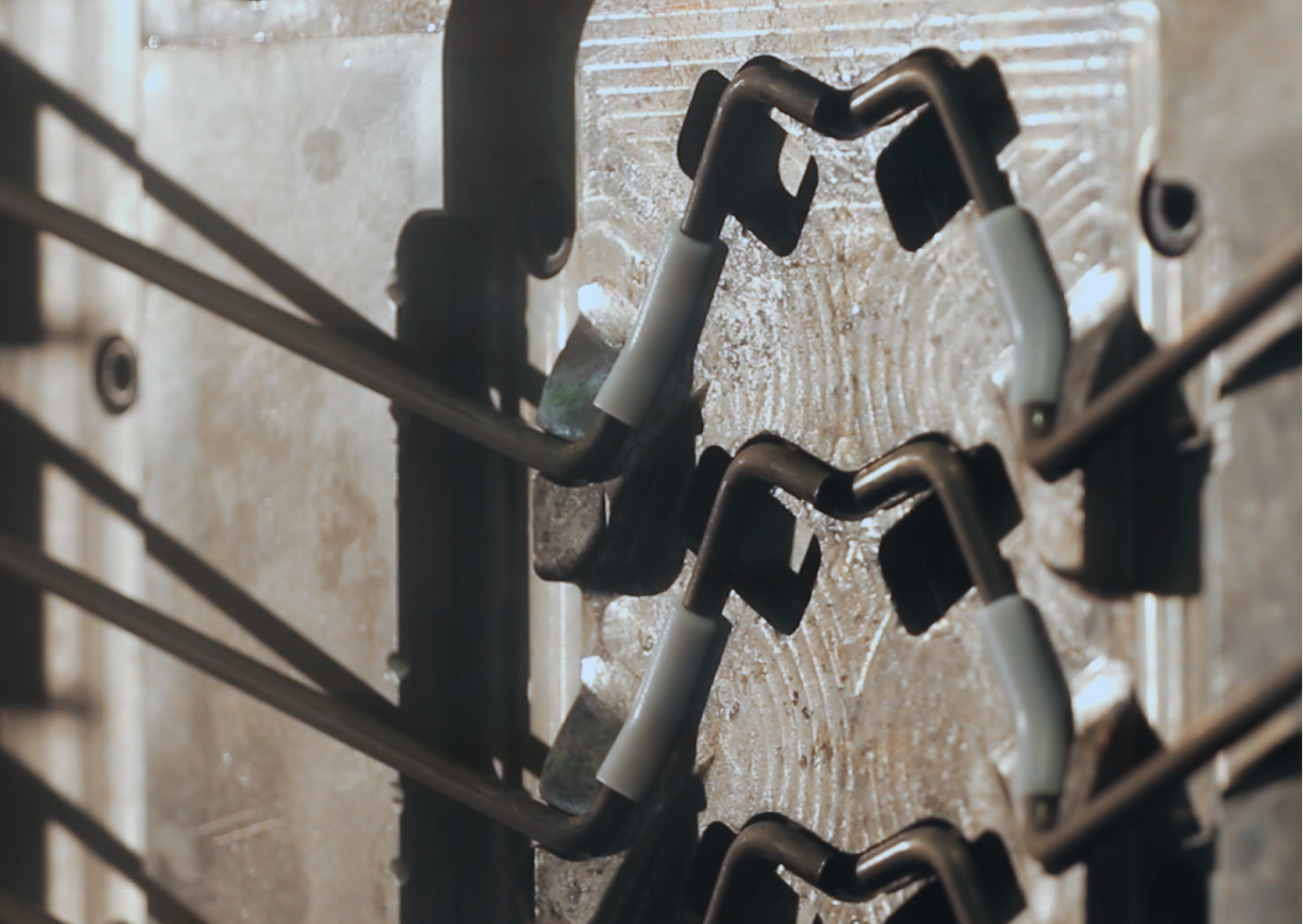
This process is also the result of a challenge that Mevis has accepted over the years.
Once again, the boost came from the market. In response to a request to add a plastic over-moulding process to certain components, Mevis reacted by acquiring plastic injection process knowledge. This led to the designing of an automatic plastic injection workstation with robotic loading/unloading and 100% camera control system for the identification and rejection of defective parts.

Heat Treatments
Heat Treatments
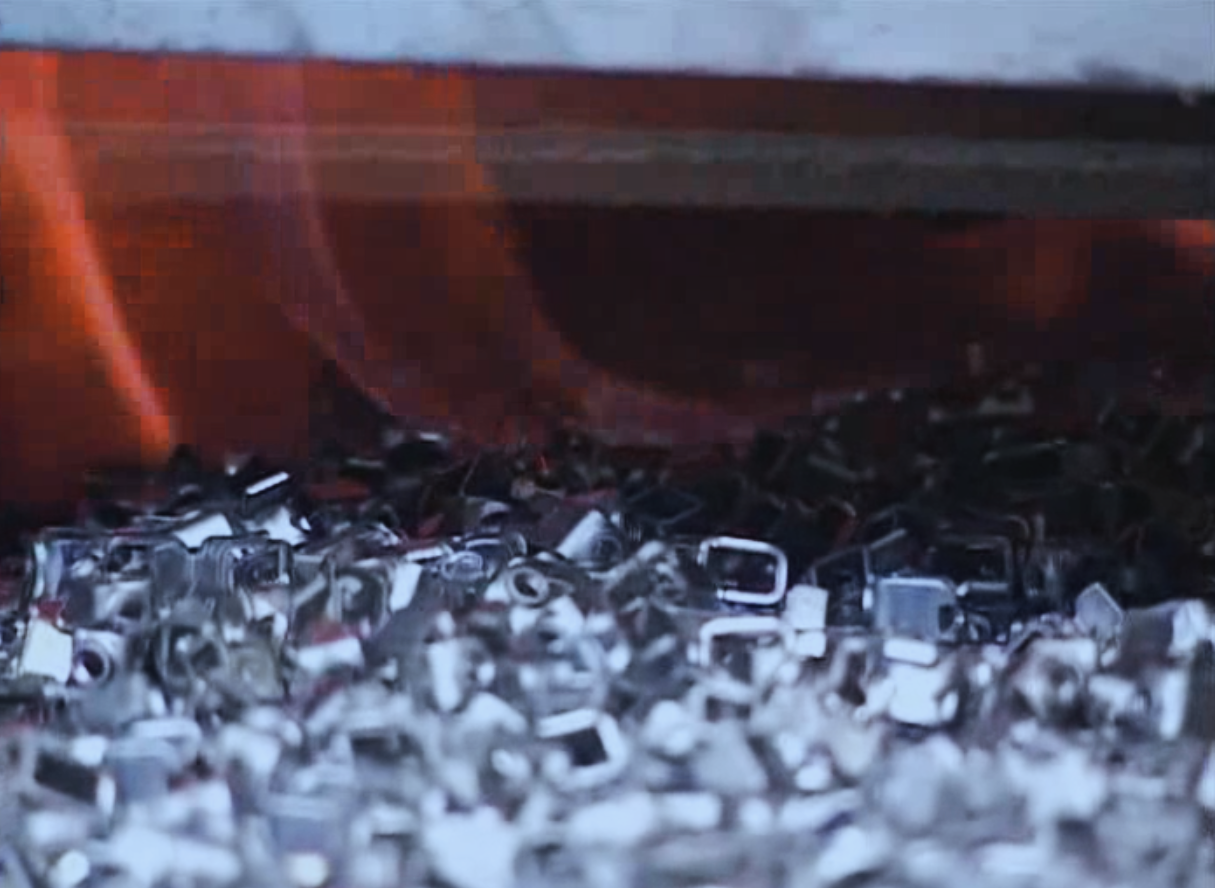
Heat treatment is a combination of heating and cooling steps to which a metal or an alloy is subjected to achieve specific mechanical properties.
Resistance and elastic characteristics of the products are then achieved with treatments such as martensitic and bainitic hardening, where greater resilience and fatigue stress are required.
The criticality of the process is well known. In addition to affecting the functionality of the part, it is often linked to the safety characteristics of the final product. Precisely for these reasons, Mevis decided from the very beginning to include heat treatments in its activities.
For springs and elastic components made from pre-hardened materials, Mevis also guarantees the quality of its products with thermal stress-relieving treatments, to remove any material tensions that form during the forming process.


E-coating
E-coating
With consolidated experience in surface treatment, Mevis integrates in Slovakia a cataphoresis plant equipped with large tanks and a pretreatment process suitable for the automotive sector. Collaboration with leading European manufacturers of paints and pretreatment products enables us to ensure controlled processes, uniform finishes and high anticorrosion performance. Cataphoresis is an ideal solution both as a final protective treatment and as preparation for subsequent painting, ensuring maximum adhesion, durability and consistent quality. Our established know-how allows us to meet the needs of the main industrial sectors with reliability, efficiency and full integration into the production process.


Powder Coating
Powder Coating
With over 25 years of experience, Mevis integrates powder coating in-house through three automatic plants located in Italy and one in Slovakia. This technology allows us to ensure high quality standards, coating uniformity and long-lasting resistance, meeting the needs of the main industrial sectors. Thanks to controlled processes and consolidated know-how, we are able to coat both functional components and parts with high aesthetic requirements, also processing third-party materials while ensuring consistent quality finishes, process reliability and full integration with the Group’s production flows.


Robotic Bending
Robotic Bending
Mevis integrates a wide range of machines dedicated to bending. Manually fed solutions are complemented by robot-assisted systems, designed to ensure maximum production flexibility and efficient management of one single piece flow. Thanks to robotic tool changing, different geometries can be produced in sequence, without intermediate setup operations and without constraints related to production batches. Automatic bend angle control ensures stable and repeatable quality, with machines capable of self-adjusting to maintain precision, continuity and reliability throughout the process.

Spring forming
Spring forming
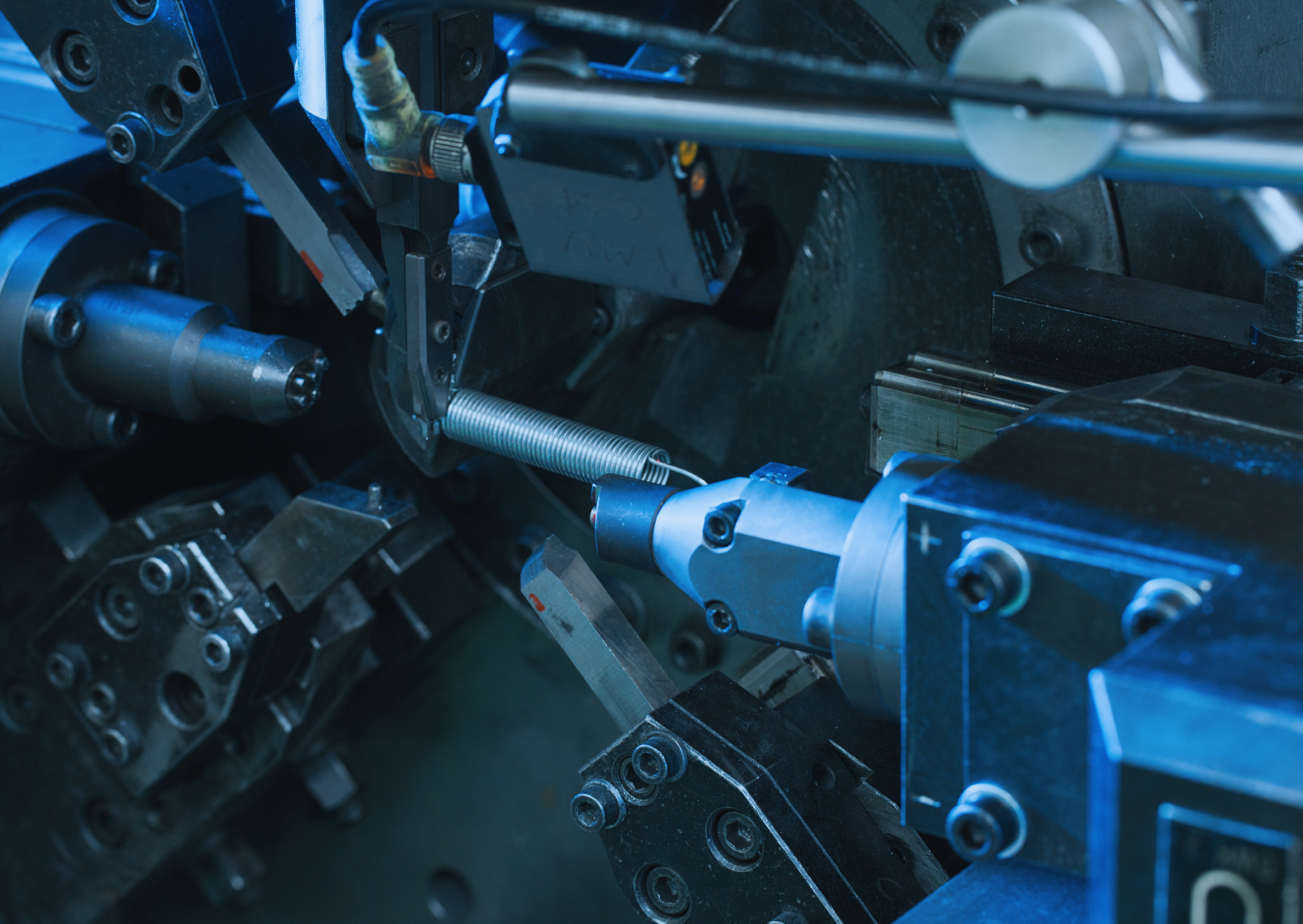
Mevis was established in 1961 as a spring manufacturer. Over the years, the company has contributed to the development of the category by taking leading positions within the European Springs Federation (ESF) and ensuring a technical contribution in the definition of international standards regulating the role of elastic components.
The group produces a wide variety of cold-formed springs: compression springs, extension springs, torsion springs as well as a wide variety of other spring components. The process takes advantage of CNC technology, using wires with diameters ranging from 0.08 mm to 7 mm. Spring forming is not limited to wire but also to non-round sections.

Wire forming
Wire forming
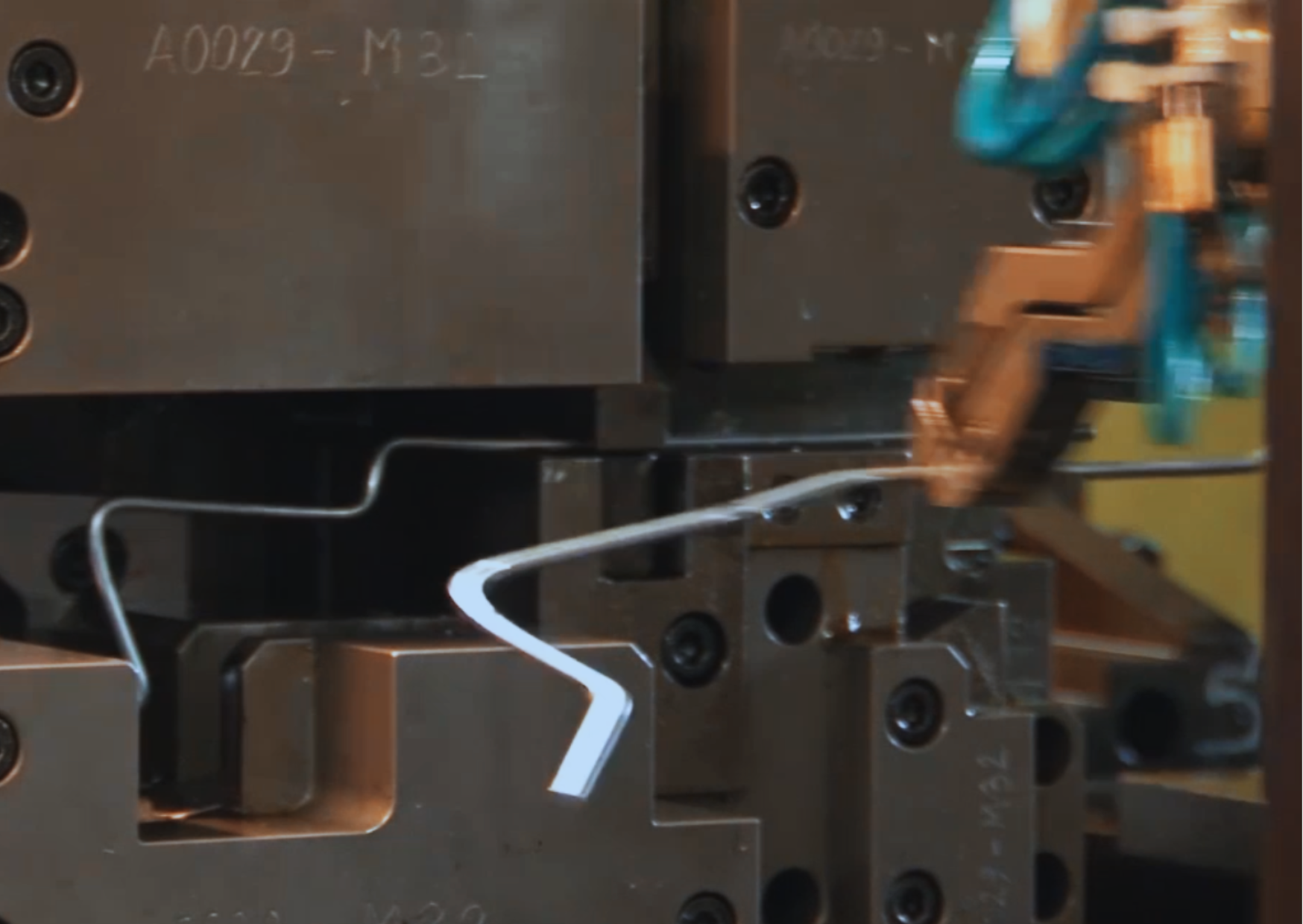
The expertise achieved in the development and design of elastic elements, as well as the related production processes, was the drive that led to expansion and investments in wire-forming technology. Wires with elastic and non-elastic characteristics are transformed to obtain a wide variety of geometries.
Today, the group produces wire components using CNC technology, mechanical bending machines, and own built machines for the larger sections. Therefore, it is possible to obtain geometries using wire in diameters from 1 mm to 12 mm, completing the bends with cold forming of the ends: e.g. rolling, crushing, chamfering, etc.

Pipe forming
Pipe forming
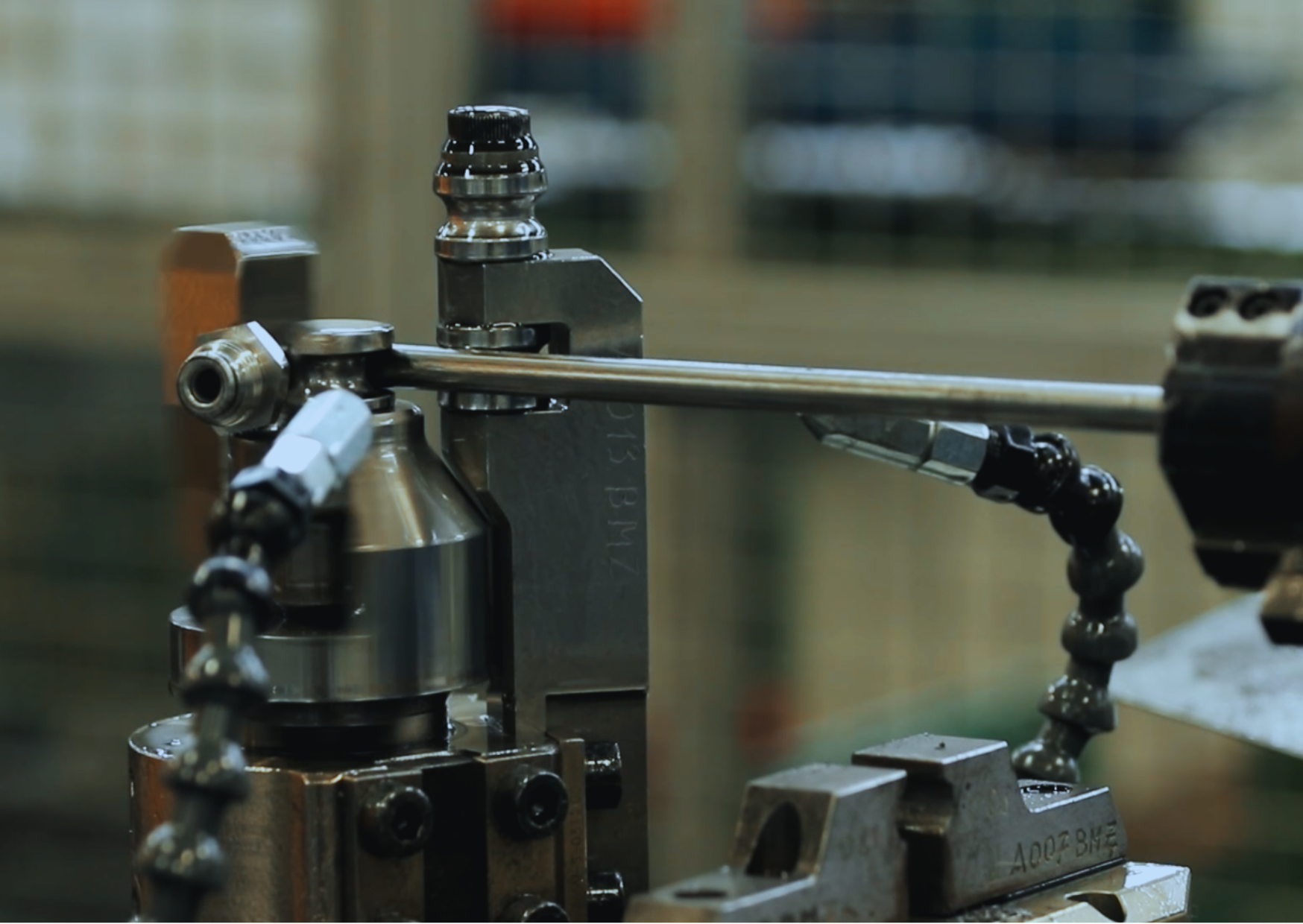
The idea of expanding from wire components to tube components was spurred by the need of the market for lighter items. The further expansion to the manufacturing of pipe components for the transfer of fluids soon became the logical evolution.
This specific application pushed Mevis to build its own pipe forming cells in order to improve manufacturing performance and ensure the availability of integrated sorting systems.
To further integrate upstream processes, Mevis also invested on tube mills for the production of the basic welded tube needed for its tube components. Thanks to this experience, Mevis can now cold form tube components with diameters ranging from 6 mm to 15 mm by integrating countless end forming processes.